Korean Drinking Etiquette: Soju, Makgeolli, Toasts and Pouring Rules
How to pour, receive and toast with soju, drink makgeolli and turn down a glass in Korea, plus 2026 drink prices, the age-19 rule and drink-driving limits.
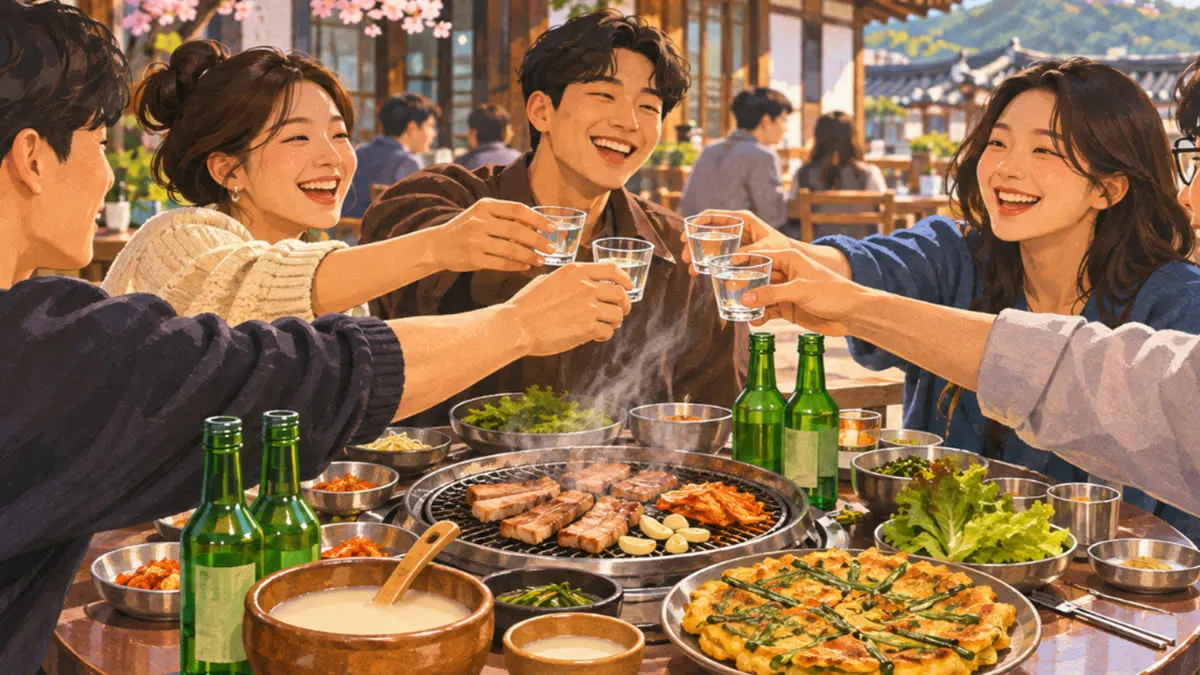
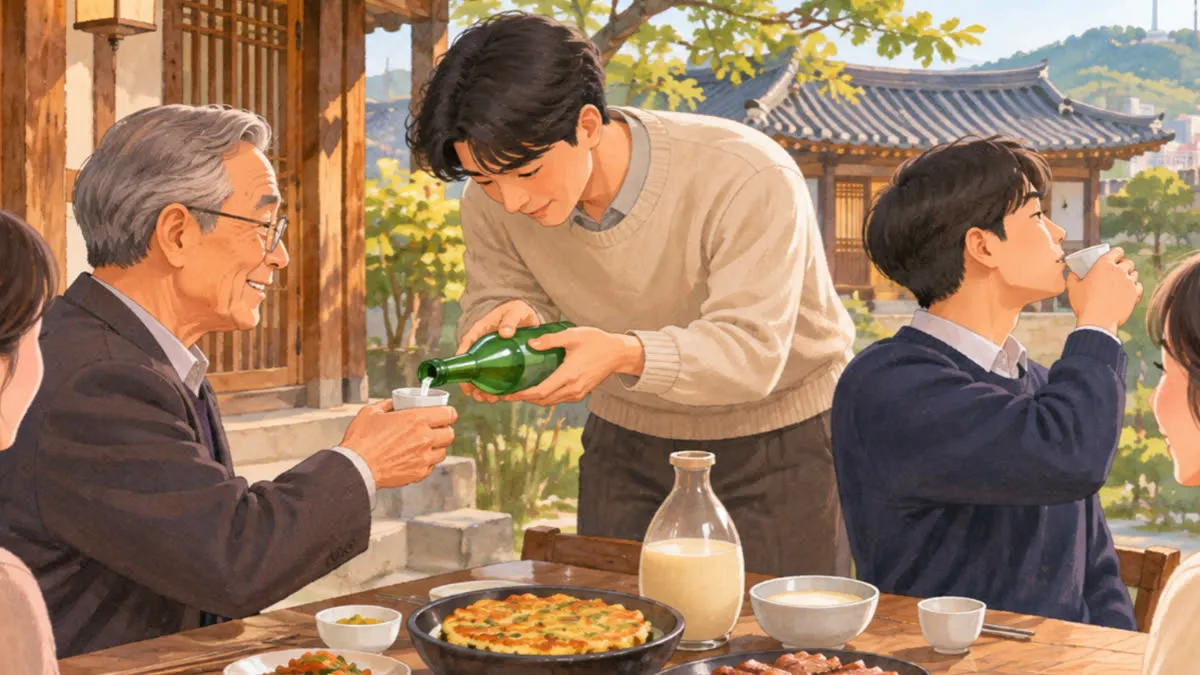
Don't pour your own glass. When someone older or more senior pours for you, take the glass with two hands, and use two hands when you pour for them. When you drink in front of them, turn your head a little to one side. With friends your own age, most of this relaxes.
The pouring and receiving rules, in the order they come up
The full set of rules applies at a table of mixed ages: a company dinner, a client, your partner's parents. Here is how they come up during a meal:
- Wait for the first pour. The oldest or most senior person is usually served first. Don't drink until every glass is full and the first toast is done.
- Receive with two hands. Lift your glass while an elder pours. Hold it in both hands, or hold it in your right hand with your left hand under it.
- Pour with two hands. Hold the bottle in your right hand and rest your left hand on your right forearm, or put your left hand under the bottle.
- Toast with your glass lower. When you clink with someone older, keep the rim of your glass below theirs.
- Turn aside to drink. In front of someone clearly senior, turn your head slightly and cover the glass with your hand as you sip.
- Watch the glasses next to you. If your neighbor's glass is empty, fill it. If yours is empty, pour for them first, and they will usually pour for you in return.
If you're unsure how formal a table is, watch the youngest Korean there and do what they do. If your Korean friends tell you to skip the formalities, skip them.
What to say when the glasses go up
- Geonbae (건배, "dry glass") is the standard toast.
- Jjan (짠, the sound of clinking glasses) is what friends say.
- At company dinners, the most senior person often gives a short speech before the first toast.
Many groups expect everyone to finish the first glass in one go, especially at work dinners. After that, sipping is fine.
Soju: the bottle, the strength and somaek
Soju comes in a 360 ml bottle and is drunk from small shot glasses. The main brands are now just under 16% alcohol. In 2026, HiteJinro lowered Chamisul Fresh from 16% to 15.7%. The new version reached shops from mid-June 2026. Jinro Is Back and Lotte's Saero are also at 15.7%, and Chum Churum is at 16%. Glasses are small, but they get refilled quickly, so a long dinner adds up.
Somaek is soju poured into beer. It goes down easily, so keep a glass of water on the side.
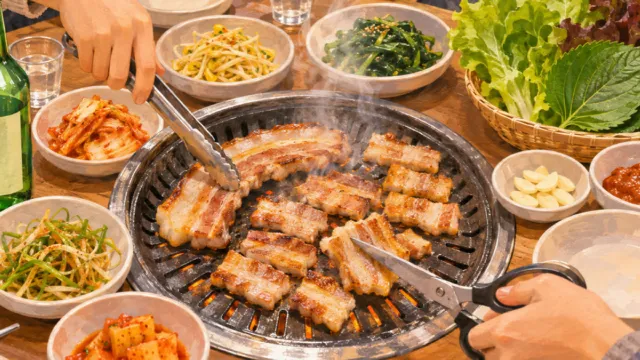
Soju is almost always drunk with food. If you're drinking at a pub, order anju (안주, bar snacks). For the ordering and grilling side of a barbecue dinner, see our Korean BBQ etiquette guide.
A night out often moves between places. 1-cha (1차) is dinner and drinks. 2-cha is a second stop, such as a pub, a fried chicken place or a pojangmacha tent bar. 3-cha is often karaoke (see how noraebang works). You can go home after any round. Saying you have an early start is enough.
Makgeolli: tip the bottle, don't shake it
Makgeolli (막걸리) is a cloudy, unfiltered rice wine. It is lower in alcohol than soju. Each bottle prints its own strength on the label.
- Mix the sediment back in. Turn the bottle upside down gently a few times before you open it. If you shake it, the fizz can spray when the cap comes off.
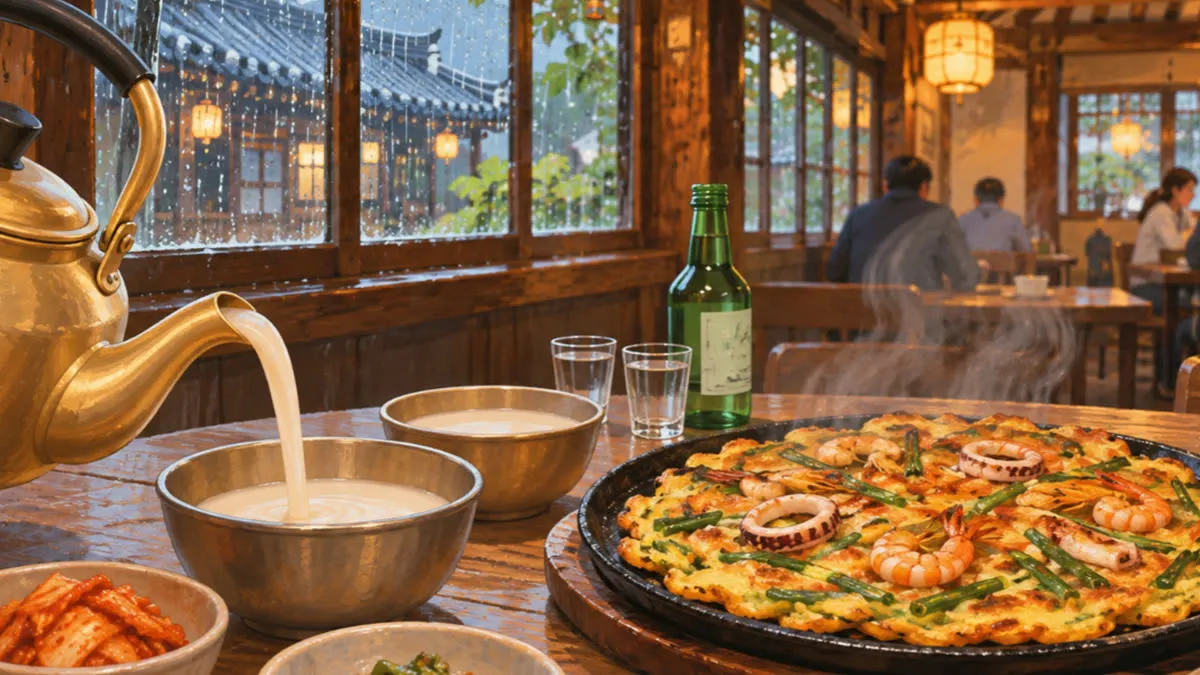
- It often comes in bowls. Traditional pubs serve makgeolli in shallow metal or ceramic bowls. The two-hand rules still apply.
- Order jeon with it. Haemul pajeon (seafood and green onion pancake) is the classic pairing. Koreans pair makgeolli and pajeon with rainy days. The Korean Food Promotion Institute links this to farmers, who rested at home with makgeolli when it rained during the busy farming season.
- Drink it fresh and cold. Check the date on the bottle.
How to turn down a drink without offending anyone
- Say no before your glass is filled. Refusing the first pour goes over better than leaving a full glass untouched.
- Give a short reason. You're taking medication, you're driving, or you don't drink. Sul-eul mot masyeoyo (술을 못 마셔요) means "I can't drink alcohol."
- If an elder has already poured, take the glass with both hands, touch it to your lips and put it down.
- To slow down, leave your glass about a third full. People refill empty glasses, not ones that still have soju in them.
- Toast with soda or water. That's fine for every toast, including the first.
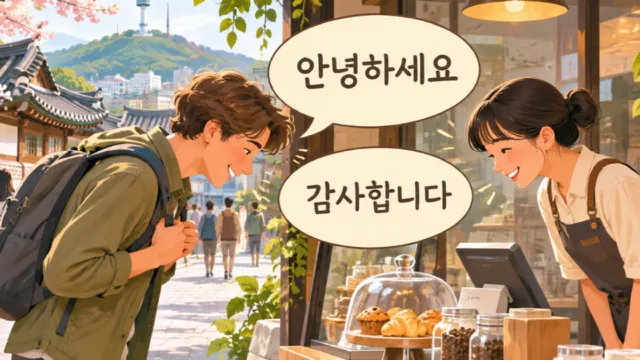
For more phrases, see Korean phrases for travelers.
What a bottle of soju costs in 2026
You buy drinks by the bottle, not by the glass. To order, say soju han byeong juseyo (소주 한 병 주세요), "one bottle of soju, please." These are prices reported in Korean news between December 2025 and October 2026:
| Where | Soju, per bottle | Source and notes |
|---|---|---|
| Neighborhood supermarkets | 990 won | Sunyang's Chakhan Soju (착한소주), launched April 2026. Sold only in small local supermarkets, and it often sells out (Money Today, July 2026) |
| Convenience store | about 1,900 won | A shopper quoted by Energy Economic News, December 2025 |
| Promotion restaurants | 1,500 won | Often self-serve from the fridge. Some charge 5,000 won if staff bring the bottle, and some deals run for a set time, such as three months (NewDaily, October 2026) |
| Typical restaurant or pub | 5,000–6,000 won | Bottled beer usually costs the same (NewDaily, October 2026) |
| Central Seoul and Gangnam | 6,000–12,000 won | Euljiro 6,000 won, Gwanghwamun 8,000 won, Apgujeong 10,000 won, Yeoksam 12,000 won (Energy Economic News, December 2025) |
Restaurants usually pay 1,300–1,500 won for a 360 ml bottle of soju, according to 2026 figures from Juryuchatja (주류찾자), a platform that compares wholesale prices. So a 1,500 won bottle makes the restaurant almost nothing. It's there to bring in diners. Most of a 5,000 won menu price is the restaurant's margin. For the cheapest drinks, buy at a convenience store.
There is no tipping. Groups split the bill at the counter, or the most senior person pays (see tipping in Korea).
You must be 19 by birth year, not by birthday
Korea switched to international age for most legal purposes in June 2023, but alcohol and tobacco kept the old rule. You can buy alcohol from January 1 of the year you turn 19. In 2026, that means anyone born in 2007 or earlier. The rule applies to foreigners too, whatever the drinking age is at home. Bars, clubs and convenience stores may ask for ID, so carry your passport or residence card.
Drinking outdoors and in no-drinking zones
Drinking in public is generally allowed. People drink beer at the tables outside convenience stores and eat chicken with beer in Hangang Park. Since June 30, 2021, the health promotion law has let provincial and city governments and county and district offices declare no-drinking zones (금주구역). Drinking in one can bring a fine of up to 100,000 won, with the exact amount set by each local government. Look for 금주구역 signs. Take your bottles and trash with you when you leave.
Drunk-driving limits and penalties
The limit is 0.03% blood alcohol, under rules in force since June 25, 2019. One or two glasses of soju can put you over it.
| Blood alcohol | Maximum penalty |
|---|---|
| 0.03–0.08% | 1 year in prison or a 5 million won fine |
| 0.08–0.2% | 2 years or 10 million won |
| 0.2% and above | 5 years or 20 million won |
| Refusing a breath test | 5 years or 20 million won |
The law applies to foreigners the same way. If you've been drinking, take a taxi (see our Seoul taxi guide) or call a daeri unjeon (대리운전) service. A driver from the service drives you home in your own car.
The next morning
Haejangguk (해장국, hangover soup) restaurants open early, and convenience stores sell hangover drinks near the counter. If someone in your group becomes unwell or lost late at night, our emergency numbers guide lists the numbers to call in English.
Sources
Last checked: — Prices, hours and rules in Korea change often; check the official pages below before you go.
- NewDaily Biz – 소주·맥주 한 병에 1500원 … 식당 초저가 술값, 남는 장사일까 (Oct 22, 2026)
- Energy Economic News – 소주 한 병에 만원…송년회 가기 무섭네 (Dec 7, 2025)
- Money Today – 990원 소주·빵부터 버거집 생맥주까지 (Jul 23, 2026)
- SBS Biz – 하이트진로, '참이슬 후레쉬' 도수 낮춘다…16도→15.7도 (Jun 2, 2026)
- Asia Economy – 정체성 모호해진 '국민 술' 소주 (Jul 14, 2026)
- Korean Food Promotion Institute (Hansik) – Traditional Liquor and Korean Jeon
- Korea Herald – Korea starts using int'l age system, but exceptions remain
- Korea Times – Tougher drunk-driving law set to come into force
- Segye Ilbo – 금주구역 지정·과태료 10만원 (국민건강증진법 시행령 개정)
Facts were checked against the sources above, and the article was written by Seoul Sidekick with the help of AI tools. Report an error