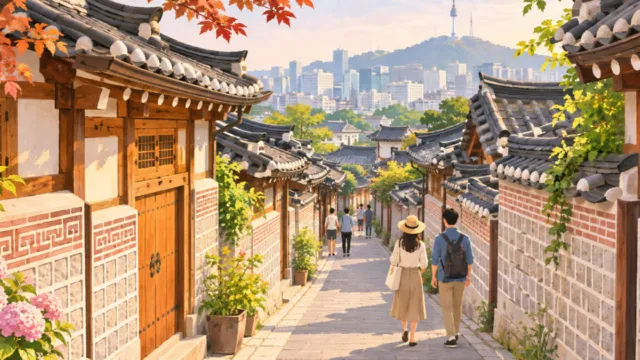
Insadong and Ikseondong: Crafts, Tea Houses and Hanok Cafes
Insadong and Ikseondong on foot: subway exits, Ssamzigil craft shops, tea houses, hanok cafes, two museums near Insadong-gil, opening hours, and what to do when the cafes are full.
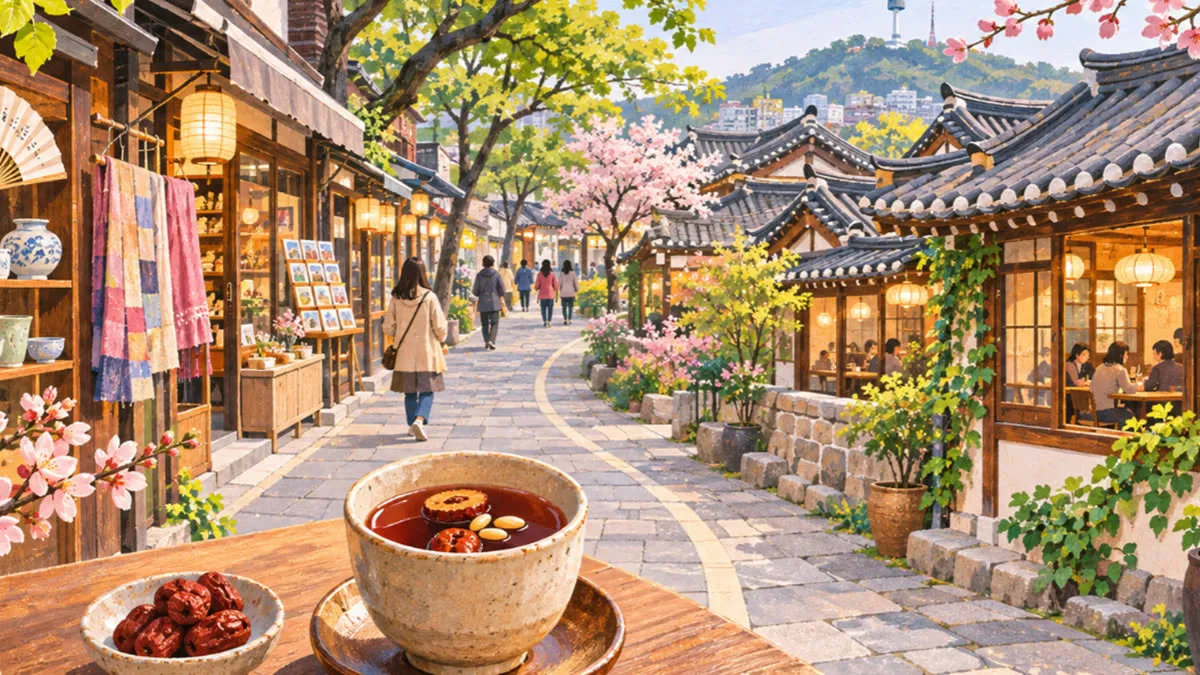
You can walk Insadong and Ikseondong in half a day. Start at Anguk Station (Line 3) Exit 6 and walk down Insadong-gil for craft shops and traditional tea. Then go to Ikseondong, a block of about 110 hanok houses from the 1920s, most of which are now cafes, restaurants and small shops. Its nearest stop is Jongno 3-ga Station Exit 4. You don't pay to walk either area. You only pay for what you buy, eat or drink.
On November 23, 2026, we checked the hours and rules below against Seoul city articles and one university wiki. Some of those sources are a few years old, and we give each one's date where it matters. Shops in both areas change often, so check any single cafe or tea house in Naver Map before you go.
Which subway exit to use for Insadong and Ikseondong
| Where you're going | Station | Exit | Notes |
|---|---|---|---|
| North end of Insadong-gil | Anguk (Line 3) | 6 | The usual starting point. Museum Kimchikan is 394 m away, about 5 minutes on foot |
| Ikseondong hanok lanes | Jongno 3-ga (Lines 1, 3, 5) | 4 | Cross the road and go into the small alley |
| Insa Historic Sites Museum | Jonggak (Line 1) | 3 | 254 m from the exit |
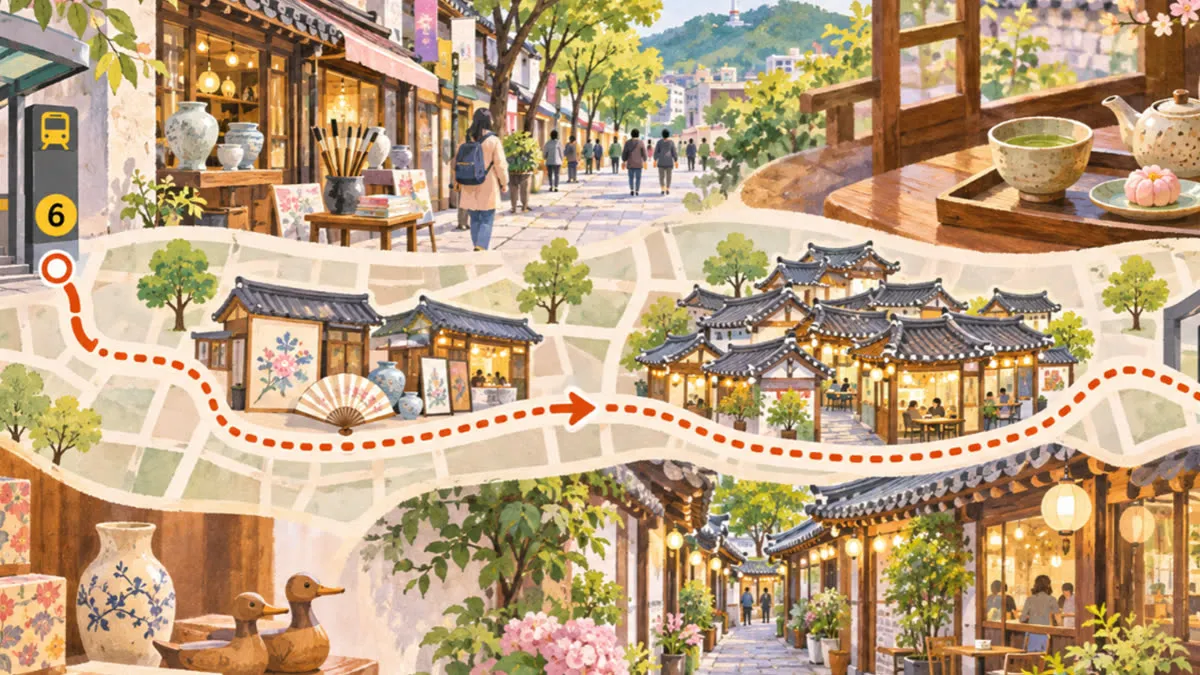
One easy route: leave Anguk Exit 6, walk south through Insadong, then head east to Ikseondong, in the back alleys near Nakwon Arcade. Finish at Jongno 3-ga, where you can take Line 1, 3 or 5 back. The route works just as well in reverse.
If you're coming from Bukchon Hanok Village, you're already near Anguk Station. Go to Exit 6 and walk down to Insadong-gil.
What to see on Insadong-gil, from north to south
Ssamzigil: four floors of shops along one ramp
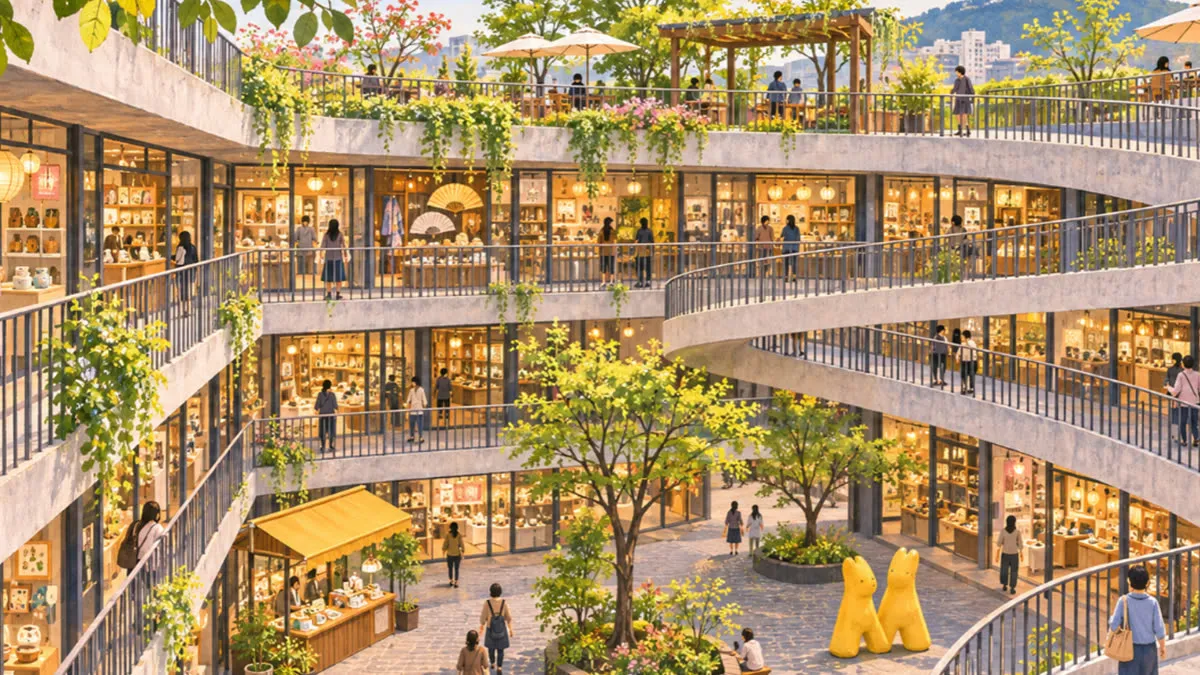
Ssamzigil (쌈지길, 44 Insadong-gil) is a square building around an open courtyard, where exhibitions and performances are held. Instead of stairs, a gentle ramp spirals up through four floors of small shops, so the whole building works like one long alley. A rooftop garden sits on top. In the basement, workshops let you try ceramics, mother-of-pearl inlay, handmade jewelry and leather, and glass or soap.
- Hours: 10:30–20:30. Closed on Seollal and Chuseok. These come from a 2020 city article, so check the Ssamzigil Naver blog (blog.naver.com/ssamzigil) for current hours.
- Phone: 02-736-0088
- How to see it all: Start in the courtyard and follow the ramp up to the roof. Each basement workshop sets its own prices and session lengths. Ask at the counter what you can make that day and how long it takes.
What crafts to look for
You'll see these crafts in the shops along Insadong-gil and in Ssamzigil:
- Hanji (Korean mulberry paper): notebooks, fans, lamps and cards. They're light and pack flat.
- Mother-of-pearl lacquerware (najeonchilgi): jewelry boxes, mirrors and trays. Small pieces fit in a suitcase.
- Ceramics: cups, small bowls and incense holders. Ask the shop to wrap them for the flight.
- Name seals (dojang): some shops carve a seal with your name.
Each shop sets its own prices, and handmade pieces cost much more than factory-made ones. If a "handmade" price looks too low, ask where the piece was made. If a shop shows a tax-free sign, see our tax refund guide for the minimum spend and how to claim.
Museum Kimchikan: kimchi history above the street
Museum Kimchikan (뮤지엄김치간) takes up floors 4 to 6 of the Insadong Maru main building at 35-4 Insadong-gil.
- 4th floor: the history and origins of kimchi
- 5th floor: videos on how kimchi is made, and a reading room
- 6th floor: a tasting room. Each visitor can take one item.
The museum runs a kimchi-making workshop and a children's kimchi school. It also offers a kimchi program for foreign visitors. There's a hanbok room too: 1,000 won (about US$0.70), adults 18 and over, 30-minute sessions at 11:00, 14:00 and 16:00.
- Hours: Tuesday to Sunday, 10:00–18:00
- Closed: Mondays, January 1, the Seollal and Chuseok holidays, and Christmas
- Docent tours: 11:00 and 14:00
These details come from a November 2024 city article, which gives no regular ticket price. Check admission and workshop fees on the museum's website, kimchikan.com.
Insa Historic Sites Museum: Joseon-era alleys under an office building
The Insa Historic Sites Museum (인사도시유적전시관) opened on July 16, 2026. It's on the first basement floor (B1) of the G1 Seoul building at 18 Jong-ro 11-gil, between Tapgol Park and the YMCA. Excavated Joseon-era alleys and building sites were kept where they were found, and you look down on them from a viewing deck. The exhibition area covers 4,810 m². One zone shows 441 of the more than 1,700 early Joseon metal printing types found on the site.
- Hours: Tuesday to Sunday, 09:00–18:00. Last entry 17:30.
- Closed: Mondays
- Admission: Free. Free guided talks run three times a day, at 11:00, 14:00 and 16:00. You can book on the Seoul Public Service Reservation site (yeyak.seoul.go.kr). The city suggests booking if you're bringing children.
- With a wheelchair or stroller: The main entrance has stairs. Use the elevator at the other entrance, and call ahead if you can.
It's free and indoors, so it suits a cold or wet day. For more indoor ideas, see Rainy Day in Seoul.
Where to drink traditional tea in Insadong
Insadong's traditional tea houses (전통찻집) serve herbal and fruit teas rather than coffee. You'll often see these on the menu:
- Daechucha (대추차): jujube tea, thick and sweet
- Yujacha (유자차): citron tea
- Omijacha (오미자차): five-flavor berry tea
- Ssanghwacha (쌍화차): a dark herbal tea
Jeontong Dawon at the Kyung-In Museum of Fine Art
The tea house at the Kyung-In Museum of Fine Art (경인미술관 전통다원) is in the inner quarters of a hanok said to have belonged to Park Yeong-hyo, a late-Joseon reformer. The hall, main room and side room have been opened up into one tea room. Six gallery halls and a garden surround it, and the galleries are free because they're sales galleries. The menu has 15 traditional teas. Jujube tea is the one most people order. A plate of eight kinds of rice cake is made fresh every day.
That description comes from an Academy of Korean Studies student wiki page last edited in December 2022. Search 경인미술관 in Naver Map for current hours, prices and the alley entrance.
How to order in a tea house
- Some tea houses seat you and bring a menu. In others, you order at the counter. If nobody comes to your table after a few minutes, go to the counter.
- Plan on one drink per person, as in a cafe.
- If you'd like your tea less sweet, ask for deol dalge (덜 달게).
- Pay at the counter. You don't tip (see tipping in Korea).
Check the menu prices before you sit down.
What Ikseondong is, and how it differs from Bukchon
In the 1920s, the property developer Jeong Se-kwon (정세권) built Ikseondong as one of Seoul's first urban hanok housing estates, before Bukchon was built. It stands on the former site of Nudonggung (누동궁), home of Jeongye Daewongun, father of King Cheoljong. About 110 hanok remain.
In 2004, the area was designated for redevelopment. The plan dragged on for ten years until the committee pushing it was dissolved in 2014. Owners then let tenants renovate the houses, and cafes, small restaurants and bars moved in.
In Bukchon, you mostly look at hanok from the street. Ikseondong is flat and tightly packed, and you can sit inside the houses as a customer.
Visiting Ikseondong's hanok cafes
- Getting there: Leave Jongno 3-ga Station by Exit 4, cross the road and go into the small alley. It leads into the hanok lanes.
- Finding a specific cafe: Shops here change often, and blog posts go out of date. Search the name in Naver Map or Kakao Map and check the latest reviews and hours (see our map app guide).
- If there's a waiting list: Some cafes ask you to sign up at the door, and some ask for a Korean phone number. If you don't have one, ask staff to take your name, or come back on a weekday morning.
- If the room has floor seating: You'll take your shoes off at the step, so slip-on shoes make it easier.
- Homes in the lanes: Some people still live in these houses. Don't open closed gates or doors, and keep your voice down in the side lanes.
When to go, and what's closed on which day
- Mondays: Museum Kimchikan and the Insa Historic Sites Museum are both closed.
- Mornings: Ssamzigil opens at 10:30, the Insa Historic Sites Museum at 09:00 and Museum Kimchikan at 10:00. Weekday mornings are the easiest time to get a seat in an Ikseondong cafe.
- Evenings: Ssamzigil closes at 20:30. Ikseondong's restaurants and bars make it a good dinner stop after Insadong.
- Seollal and Chuseok: Ssamzigil and Museum Kimchikan both close. Many small shops close too.
Changdeokgung is just across the road from the Ikseondong lanes. See Five Palaces of Seoul for palace tickets and hours.
Sources
Last checked: — Prices, hours and rules in Korea change often; check the official pages below before you go.
- Seoul Metropolitan Government Mediahub – Ikseondong alleys (about 110 hanok, Jeong Se-kwon, Jongno 3-ga Exit 4), April 2017
- Seoul Metropolitan Government Mediahub – Nakwon Arcade back alleys and Ikseondong hanok village (Nudonggung, 2004 redevelopment, 2014), March 2021
- Seoul Metropolitan Government Mediahub – Ssamzigil (hours, layout, workshops), February 2020
- Seoul Metropolitan Government Mediahub – Museum Kimchikan (hours, floors, closures, hanbok room), November 2024
- Seoul Metropolitan Government Mediahub – Insa Historic Sites Museum opening, July 2026
- Academy of Korean Studies Digital Humanities wiki – Insadong traditional tea house Jeontong Dawon (last edited December 2022)
Facts were checked against the sources above, and the article was written by Seoul Sidekick with the help of AI tools. Report an error