Best Time to Visit Korea: Weather, Crowds and Festivals by Month
Go mid-April to May or late September to early November. Seoul monthly weather from KMA, blossom and foliage dates, festival dates and holiday weeks to avoid.
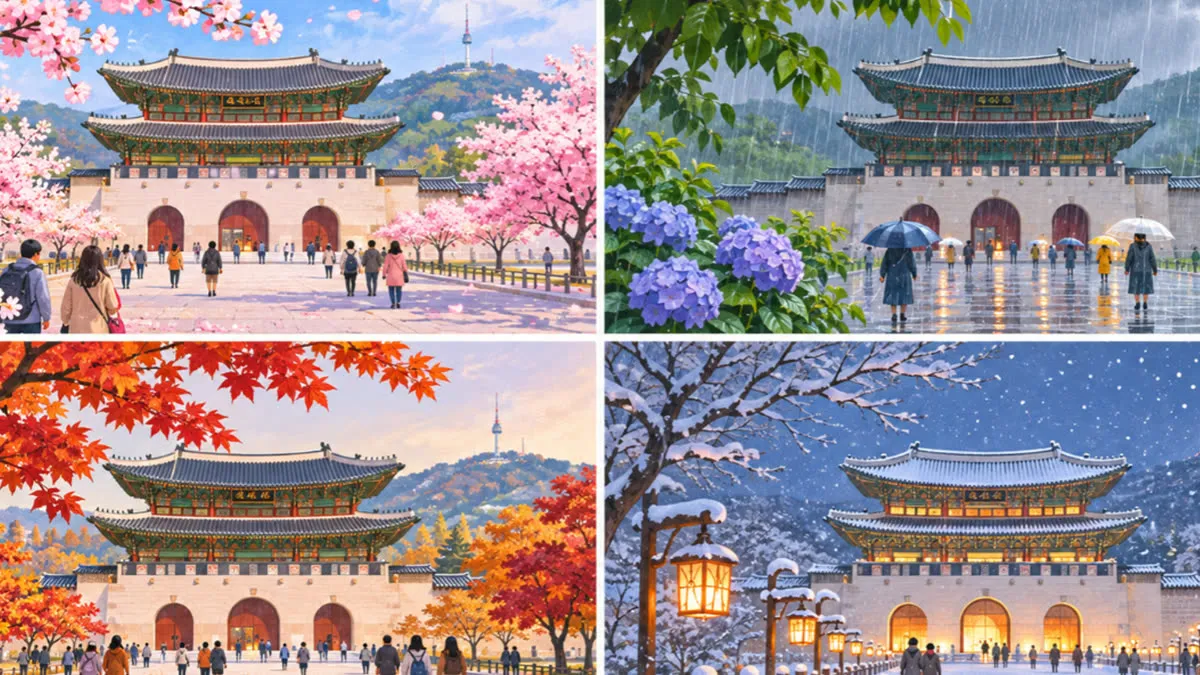
The best time to visit Korea is mid-April to May or late September to early November. Seoul averages highs of 18–24°C in April and May and 20–26°C in September and October, with far less rain than in summer. July and August are hot and wet: July alone brings about 414 mm of rain to Seoul. December to February is cold and dry, with average lows below freezing in Seoul.
Seoul weather by month (KMA 1991–2020 averages)
These are the Korea Meteorological Administration (KMA) 1991–2020 normals for Seoul. We rounded them. Rainy days are days with at least 1 mm of rain.
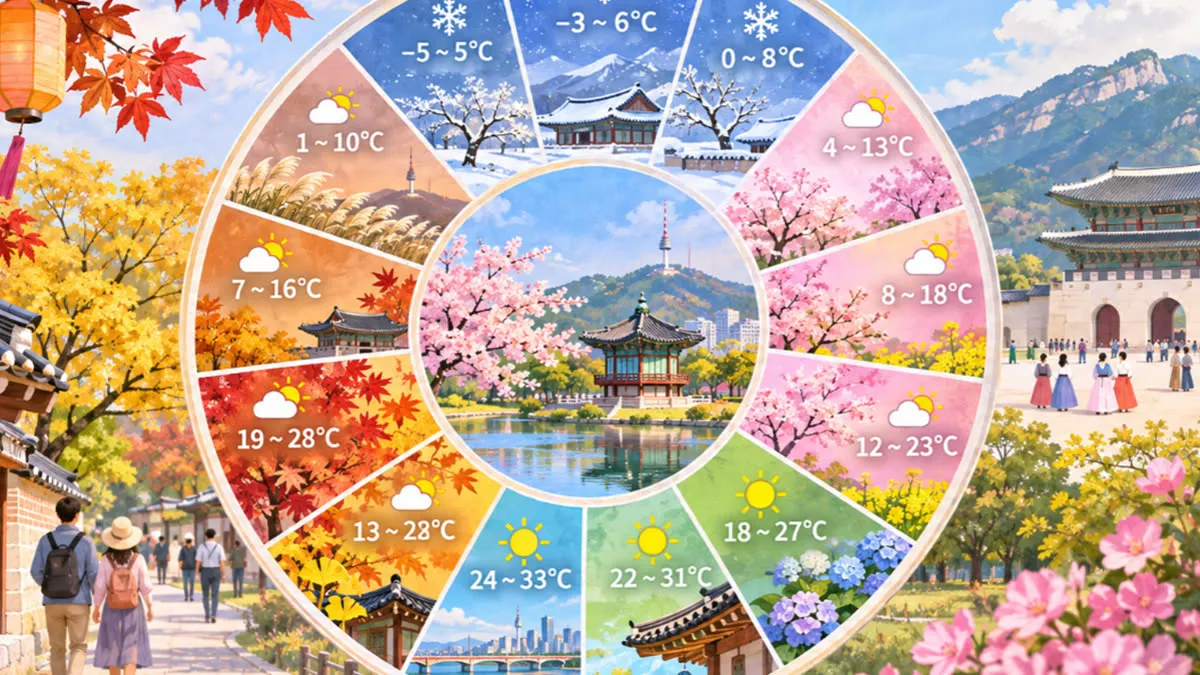
| Month | Avg high | Avg low | Rain (mm) | Rainy days | What to expect |
|---|---|---|---|---|---|
| Jan | 2°C | -6°C | 17 | 3 | Coldest month, dry |
| Feb | 5°C | -3°C | 28 | 3 | Cold, Seollal often falls here |
| Mar | 11°C | 2°C | 37 | 5 | Cool; blossoms start in the south |
| Apr | 18°C | 8°C | 73 | 7 | Mild; cherry blossoms in Seoul |
| May | 24°C | 14°C | 104 | 7 | Warm, green |
| Jun | 28°C | 19°C | 130 | 8 | Humid; monsoon reaches the south late in the month |
| Jul | 29°C | 22°C | 414 | 13 | Monsoon; the wettest month |
| Aug | 30°C | 23°C | 348 | 12 | Hottest month; peak holiday crowds |
| Sep | 26°C | 18°C | 142 | 7 | Warm, getting drier; Chuseok often falls here |
| Oct | 20°C | 11°C | 52 | 5 | Dry, clear; foliage in the mountains |
| Nov | 12°C | 4°C | 51 | 6 | Foliage in Seoul early, then cold |
| Dec | 4°C | -3°C | 23 | 4 | Cold, dry |
Seoul gets about 1,418 mm of rain a year. About 63% of it falls in June, July and August. December to February together get less than 5%.
The rest of the country follows the same pattern, with some differences. KMA gives monthly mean temperatures of 23–27°C in August and -6 to 7°C in January, depending on the region. Jeju and the south coast are the mild end of that January range. The inland north is the cold end.
In April and October the average gap between Seoul's daytime high and night-time low is about 10°C. Bring a jacket for the evening even if the afternoon is warm. For a full list by season, see What to Pack for Korea.
Monsoon and typhoons: June to October
The summer rainy season is called jangma (장마). KMA says it starts in the south in late June, moves north, and lasts about 30 days on average. It brings frequent heavy rain and flash floods. More than half of Korea's yearly rain falls during jangma.
KMA says two or three typhoons affect the peninsula each year, between June and October. If your trip includes Jeju or another island in that period, plan one spare day in case ferries or flights are cancelled. For wet days in the city, see Rainy Day in Seoul.
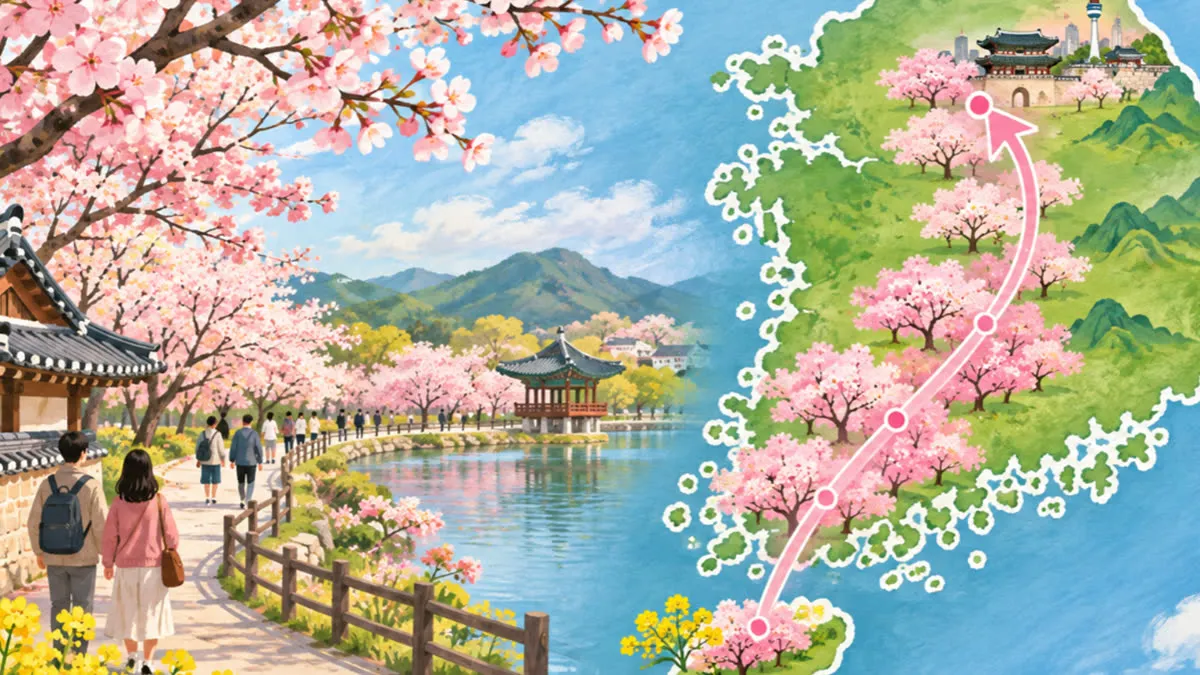
When cherry blossoms bloom: late March to mid-April
The blossoms open in the south first and reach Seoul last.
- Seoul, normal dates: first bloom April 8, full bloom April 10 (KMA 1991–2020).
- Seoul, recent years: blooming has often come much earlier. First bloom was March 24 in 2021, the earliest on record, and March 25 in 2023, 14 days ahead of normal.
- How KMA decides: Seoul's first bloom is declared when at least three flowers are fully open on one branch of the official king cherry tree at the Seoul Meteorological Observatory in Jongno-gu. Full bloom means at least 80% of the flowers on the tree are open. KMA also watches a second set of trees on Yunjung-ro in Yeouido.
Full bloom comes only a few days after first bloom, so the best viewing window is short. For Seoul, plan for late March to mid-April, and check KMA's bloom announcements closer to your trip. Yunjung-ro is busiest on weekends. Weekday mornings are quieter.
When autumn leaves turn: late September to early November
Autumn color starts in the northern mountains and moves south. These are KMA's 1991–2020 normal dates. "First color" means about 20% of the mountain has turned, starting near the summit. "Peak" means about 80% has turned.
| Mountain | Region | First color | Peak |
|---|---|---|---|
| Seoraksan | Gangwon | Sep 28 | Oct 17 |
| Deogyusan | North Jeolla | Oct 9 | Oct 21 |
| Jirisan | South | Oct 11 | Oct 23 |
| Bukhansan | Seoul | Oct 15 | Oct 28 |
| Gyeryongsan | South Chungcheong | Oct 16 | Oct 27 |
| Palgongsan | Daegu | Oct 17 | Oct 28 |
| Mudeungsan | Gwangju | Oct 21 | Nov 4 |
In 2026, Seoraksan's first color came on September 28, the same date as normal. If you want leaves inside Seoul, late October is the safest choice: Bukhansan peaks on October 28 in a normal year. For trails and how to get there, see Bukhansan Hiking.
Festival dates from 2026, and where to check for 2027
Organizers set new dates every year. The dates below are from 2026. Use them as a guide to timing, and check the official site before you book.
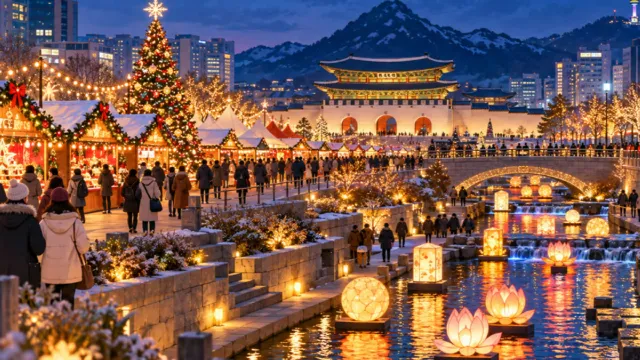
- Seoul Lantern Festival (December–January): The 2025–26 festival ran from December 12, 2025 to January 18, 2026 along Cheonggyecheon Stream, from 6 p.m. to 11 p.m. Seoul City posts each year's dates on mediahub.seoul.go.kr.
- Boryeong Mud Festival (late July–early August): The 29th festival ran from July 24 to August 9, 2026 (17 days) at Daecheon Beach. Dates are on mudfestival.or.kr.
- Busan Sea Festival (early August): August 7–13, 2026 at Dadaepo Beach.
- Busan Fireworks Festival (autumn, one Saturday): November 7, 2026, over Gwangalli Beach, Igidae and Dongbaek Island. Both Busan festivals are listed on bfo.or.kr.
- Hwacheon Sancheoneo Ice Festival (January): This is a winter ice-fishing festival. We could not load the 2027 dates from the official site (narafestival.com), so check there before you plan around it.
For December events in the capital, see Christmas in Seoul 2026. For the chance of snow, see Korea First Snow 2026.
Holiday weeks that make domestic travel hard
- Seollal (Lunar New Year) and Chuseok (harvest festival): Each gives at least three days off. Seollal falls in late January or February. Chuseok falls in September or early October. Intercity trains and buses fill up, highways are jammed, and many small family-run restaurants and market stalls close for a day or more. Convenience stores and large chain shops in Seoul generally stay open. If you are in Korea during these weeks, stay in one city and travel before or after. Opening hours at palaces and museums are on each venue's own site. To check booking dates, see KTX Booking for Foreigners.
- Children's Day (May 5) and late July to mid-August: These are peak times for domestic travel. Beaches, KTX trains and Jeju flights are at their fullest.
- Weekends at peak blossom and peak foliage: Famous spots are most crowded then. Go on a weekday.
Cheapest and quietest months
January to early March is the quietest season, apart from the Seollal week. Prepare for real cold. Seoul's average January high is 2°C and the average low is -6°C. KMA's averages also hide windy days that feel much colder. A down jacket, gloves and a hat make the city manageable, and warm indoor stops like a jjimjilbang help too.
Air quality is a separate issue from the weather. Check it on the AirKorea site or app before outdoor days, especially in spring, and move museums and indoor sights to days with poor air.
For anything not covered here, the Korea Travel Hotline (1330) answers questions in English. See Emergency Numbers in Korea.
Sources
Last checked: — Prices, hours and rules in Korea change often; check the official pages below before you go.
- Korea Meteorological Administration – Climate of Korea
- Climate of Seoul (KMA 1991–2020 normals table)
- KMA press release – Seoul cherry blossom first bloom, March 25, 2023 (normals April 8 / April 10)
- Korea.kr – KMA autumn foliage normals (1991–2020), October 14, 2026
- Boryeong Mud Festival official site
- Busan Festival Organization (Fireworks Festival, Sea Festival)
- Seoul Media Hub – Seoul Lantern Festival 2025–26
Facts were checked against the sources above, and the article was written by Seoul Sidekick with the help of AI tools. Report an error